
 RU
RU
Abstract
The Chang'e-6 mission achieved a historic first: returning samples from the Moon's far side. That achievement depended on thousands of subsystems operating at their design limits — including the cryogenic propellant measurement chain. Our balanced flowmeter addresses the specific failure modes of conventional instruments in LOX/LH2 service: material incompatibility, missing property data, and excessive pressure loss leading to phase change. With cryogenic-rated construction, a 10,000-species fluid database, and pressure loss one-third that of orifice plates, it provides the measurement certainty required for precision launch operations.
Mission Overview
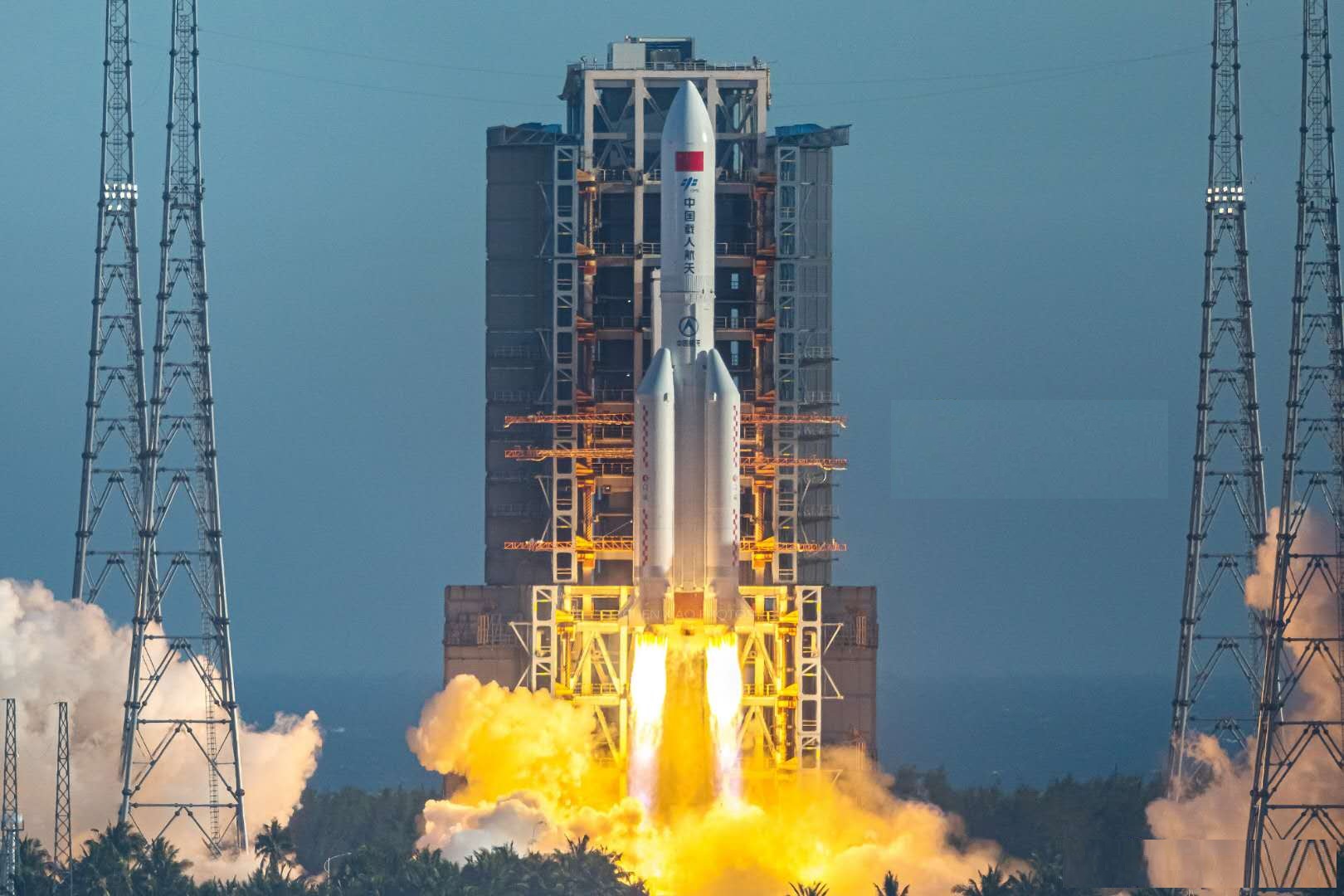
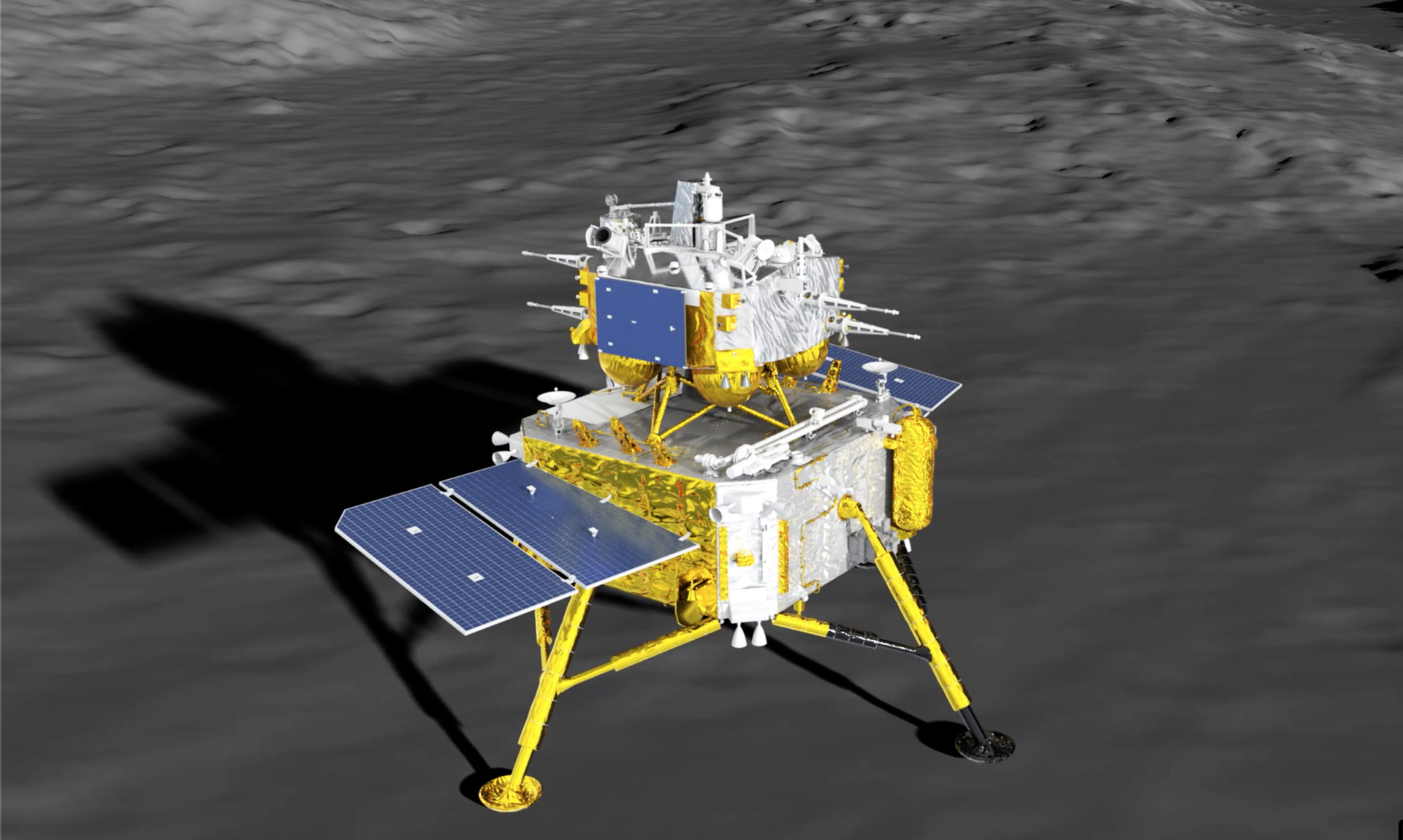
On May 3, 2024, China launched the Chang'e-6 robotic lunar mission from the Wenchang Space Launch Site aboard a Long March 5 heavy-lift rocket. On June 1, 2024, the spacecraft achieved a precision landing in the Apollo basin, located within the South Pole–Aitken (SPA) basin on the Moon's far side. It collected 1.9 kg of lunar rock and regolith samples and returned them to Earth on June 25, 2024 — marking humanity's first sample return from the lunar far side.
The Propulsion Challenge: Cryogenic LOX/LH2
The Long March 5 launch vehicle utilizes liquid oxygen (LOX) and liquid hydrogen (LH2) as primary cryogenic propellants. These fluids are stored at:
Liquid Oxygen LOX: -183°C
Liquid Hydrogen LH2: -253°C
Accurate fuel flow measurement under cryogenic conditions is very important - it is a deterministic input to engine throttling, mixture ratio control, and overall trajectory precision. Errors in flow measurement propagate directly into thrust imbalance, inefficient propellant utilization, and mission abort scenarios.
Why Conventional Flow Meters Fail
Most flow meters face critical limitations in cryogenic propellant measurement:
1. Material embrittlement: Common sensor materials lose ductility and sealing integrity at cryogenic temperatures, causing mechanical failure or calibration drift.
2. Lack of cryogenic property data: Most flow measurement systems do not include physical property databases for fluids at −253 °C. Density, viscosity, and compressibility must be known to convert volume flow rate into mass flow rate.
3. Excessive permanent pressure loss: Orifice plates typically produce a permanent pressure loss of 40–90% of the measured differential pressure. In a cryogenic hydrogen line, this pressure drop can induce localized vaporization (cavitation), destroying measurement stability and threatening pump cavitation damage.
How Our Balanced Flowmeter Solves These Problems
Our balanced flowmeter was engineered for applications where conventional instruments fail. In cryogenic aerospace propellant systems, it delivers three decisive advantages:
1. Full Cryogenic Temperature Capability
The carefully designed body structure and material are rated for continuous operation from −196 °C to +850 °C, covering liquid hydrogen, liquid oxygen, liquid nitrogen, and all standard cryogenic coolants without material degradation or calibration shift.
2. Integrated Physical Property Database
Our flow calculation software includes a database of 10,000+ fluid species, with validated equation-of-state coverage from cryogenic (20 K) to high-temperature (1,500+ K) regimes. For LOX/LH2 applications, density, viscosity, isentropic exponent, and thermal expansion coefficients are automatically interpolated at the operating temperature.
3. Permanent Pressure Loss Reduced to One-Third
Due to the multi-hole balanced design, the permanent pressure loss is approximately 1/3 that of a conventional orifice plate of equivalent beta ratio and pipe size. For cryogenic hydrogen at near-saturation conditions, thismargin is the difference between stable liquid-phase measurement and two-phase gasification.

Application to Launch Vehicle Ground Support
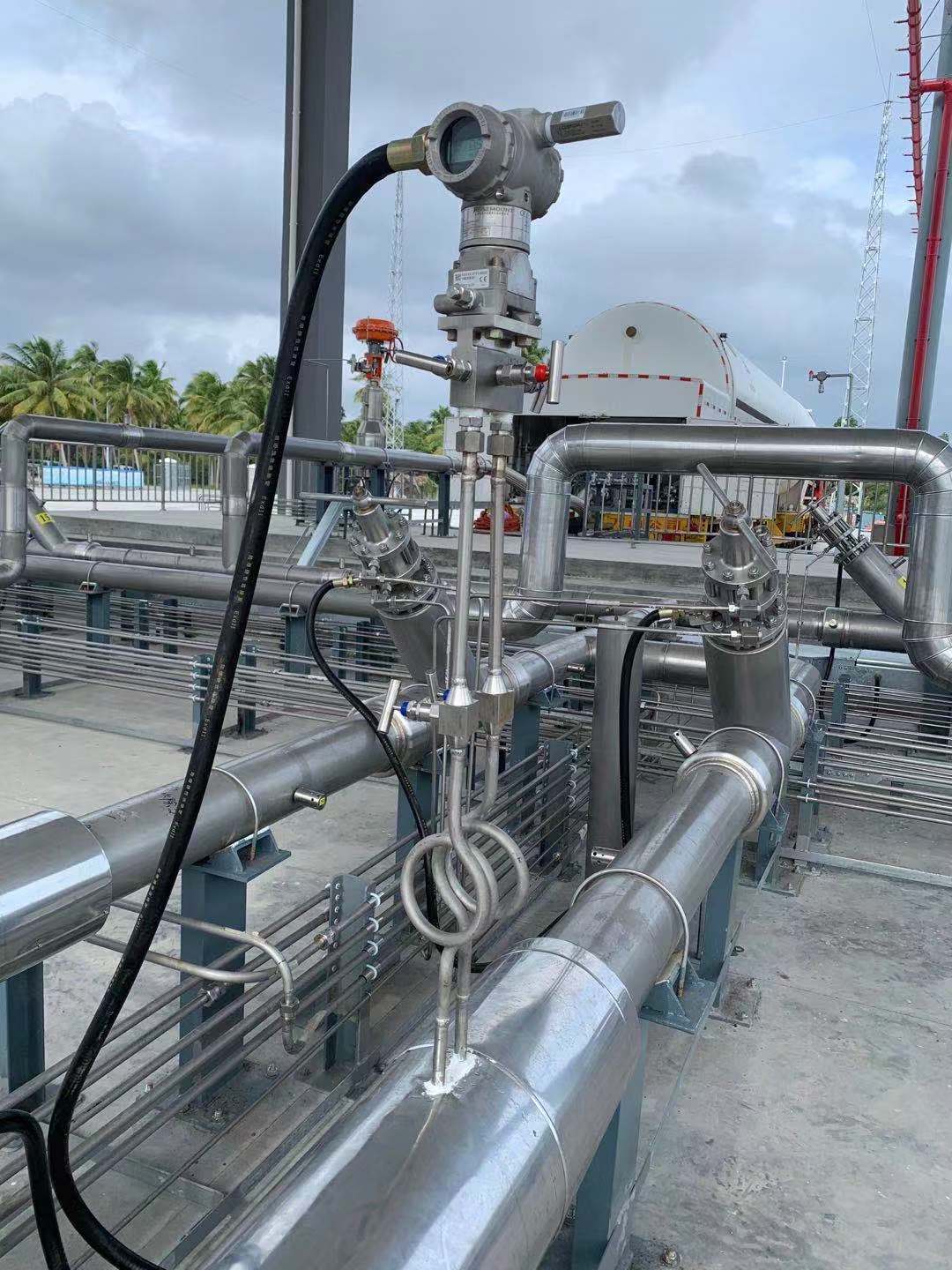
In the Chang'e-6 launch campaign, our balanced flowmeters were deployed in the Long March 5 ground support propellant loading system. Function:
1. Real-time mass flow rate monitoring during LOX and LH2 tank fill operations
2. Leak detection and inventory reconciliation via cumulative mass totalization
3. Pump protection by maintaining suction pressure above the net positive suction head (NPSH) requirement — directly enabled by the low pressure-loss design
4. Go/no-go launch commit data provided to the launch control system with calibrated uncertainty
 Add: 7C, Dongfang International Technology Building, 58 Xiangcheng Road, Pudong District, Shanghai
 Tel: +86 021-58355535
 Fax: 021-58352115
 E-mail: info@aplusx.com
 Zip code: 200122


